
From Scalpels to Spinal Cages: Where MIM Serves Medicine Today
Surgical Instruments


Orthopedic Implants
Dental Components and Other Applications
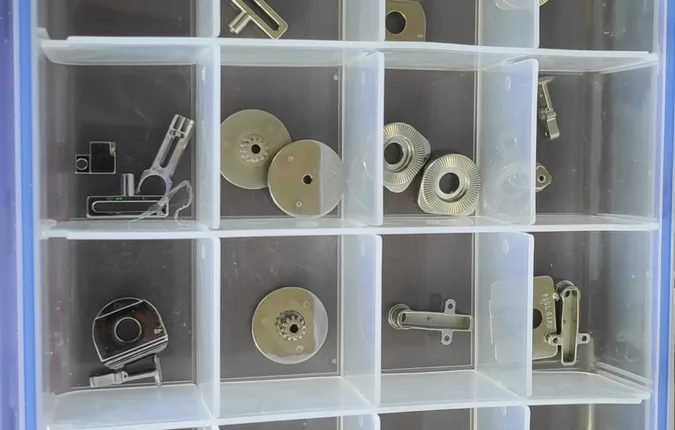
Dental components were among the earliest MIM applications and remain one of the largest. Orthodontic brackets from leading brands — 3M Unitek’s Gemini MBT, Ormco’s Mini Diamond Roth, and Tomy’s Formula R Roth — are all manufactured via MIM in 316L stainless steel. Indo-MIM won the 2025 MPIF Grand Prize for an A-to-Z palatal expander assembly used in orthodontic treatment and sleep apnea therapy. Beyond brackets, MIM produces dental implant abutments in Ti-6Al-7Nb, ultrasonic endodontic tips, and scaler instruments.
Other notable applications include drug delivery devices (insulin pen components, auto-injector mechanisms — such as Phillips-Medisize’s Aria Smart Autoinjector platform), cardiac devices (titanium pacemaker housings, MIM 316L stents successfully tested in animal arteries), surgical robotics (high-precision articulating gears for platforms like da Vinci), hearing aids (achieving roughly 20% cost savings through MIM), and diagnostic equipment (electromedical connectors, hospital bed mechanisms). In late 2024, Biomerics launched a dedicated MIM Center of Excellence specifically targeting surgical robotics and minimally invasive device components.
Biocompatible Alloys That Power Medical MIM
The material palette for medical MIM spans stainless steels, titanium alloys, cobalt-chromium, shape-memory alloys, and emerging bioabsorbable metals — each governed by specific ASTM standards and ISO 10993 biocompatibility requirements.

316L austenitic stainless steel
remains the industry workhorse, accounting for roughly 35% of all MIM production. MIM 316L achieves 97–99% of theoretical density (7.87 g/cm³), tensile strength of 520–540 MPa, and elongation of 33–70% depending on sintering atmosphere. Its as-sintered surface finish of Ra 0.6–1.3 µm can be electropolished to Ra < 0.05 µm. The material satisfies ISO 10993 biocompatibility standards and withstands repeated autoclave sterilization — making it the default choice for surgical instruments and temporary implants. 17-4PH precipitation-hardening stainless steel offers significantly higher strength (1,070–1,280 MPa after heat treatment) and hardness up to 43 HRC, suited to instruments that need superior wear resistance, though its lower corrosion resistance limits it to non-implant applications.
Titanium alloys
have opened the door for MIM in permanent implants. MIM Ti-6Al-4V achieves 95–99% of theoretical density, tensile strength exceeding 800 MPa, and elongation above 15% after HIP. The key standard is ASTM F2885-17(2023), covering two types of MIM Ti-6Al-4V for surgical implant use, with minimum requirements of 900 MPa tensile strength, 828 MPa yield, and 10% elongation. Notably, the inherent surface texture of MIM titanium actually promotes cell adhesion and bone integration better than machined surfaces — a property that implant designers actively exploit.
Cobalt-chromium alloys (CoCrMo per ASTM F75) are the material of choice for wear-critical orthopedic components — hip and knee joint replacements, dental prosthetics, and spinal implants — thanks to their exceptional fatigue resistance and corrosion performance. Nitinol (NiTi) brings shape-memory and superelastic properties to MIM stents, guidewires, and fracture-healing staples. Tungsten heavy alloys (17–18 g/cm³) serve as radiation shielding in diagnostic equipment, and ceramic injection molding (CIM) of yttria-stabilized zirconia produces dental implants with 2–3× greater rigidity than alumina-based alternatives.
| Material | Density (% theoretical) | Tensile Strength (MPa) | Key Standard | Primary Medical Uses |
|---|---|---|---|---|
| MIM 316L SS | 97–99% | 520–540 | ASTM B883 | Instruments, temporary implants, brackets |
| MIM 17-4PH SS | 96–98% | 1,070–1,280 (HT) | ASTM B883 | High-strength instruments, device housings |
| MIM Ti-6Al-4V | 95–99% | 800–900 (HIP) | ASTM F2885 | Permanent implants, spinal cages, bone screws |
| MIM CoCrMo | 96–99% | ~900+ | ASTM F2886 | Joint replacements, wear-critical implants |
| MIM NiTi | >97% | ~830 | — | Stents, guidewires, staples |
Why MIM Outperforms Machining for Complex Medical Parts
The economic and technical advantages of MIM over CNC machining and investment casting grow more decisive as part complexity and production volume increase. Unlike subtractive processes, where cost rises with geometric complexity, MIM’s complexity is essentially free — it is encoded in the mold rather than accumulated in per-part machining time.
The cost argument is compelling at scale. A real-world comparison by Smith Metal Products for 100,000 surgical components showed MIM at $2.50 per part versus $8.25 per part for CNC — a 70% reduction. Tooling investment of $20,000–$50,000 per mold amortizes rapidly across production runs. MIM becomes cost-competitive starting at around 10,000 units per year and reaches its sweet spot at 25,000–500,000+ units annually, with savings of 52–78% versus CNC at those volumes. Material utilization reinforces the advantage: MIM converts 95–98% of raw material into finished parts, compared to just 10–40% for CNC machining of complex geometries.
Precision and surface quality meet the strict requirements of medical applications. Standard as-sintered tolerances fall within ±0.3–0.5% of nominal dimensions, with best-case precision reaching ±0.038 mm on features under 7.5 mm. As-sintered surface finish (Ra < 1.2 µm) surpasses that of precision investment casting and can be polished to a mirror finish (Ra < 0.05 µm). For implant surfaces, the controlled roughness of as-sintered MIM titanium is actually a functional benefit — it enhances cellular attachment and encourages osseointegration.
Miniaturization Through Micro-MIM
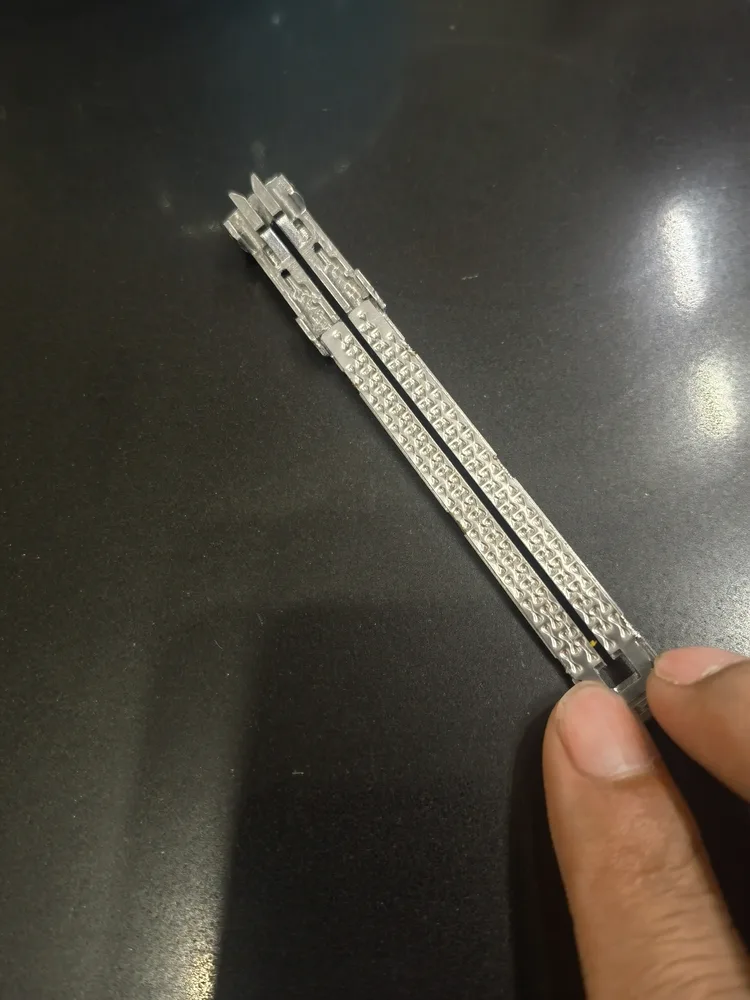
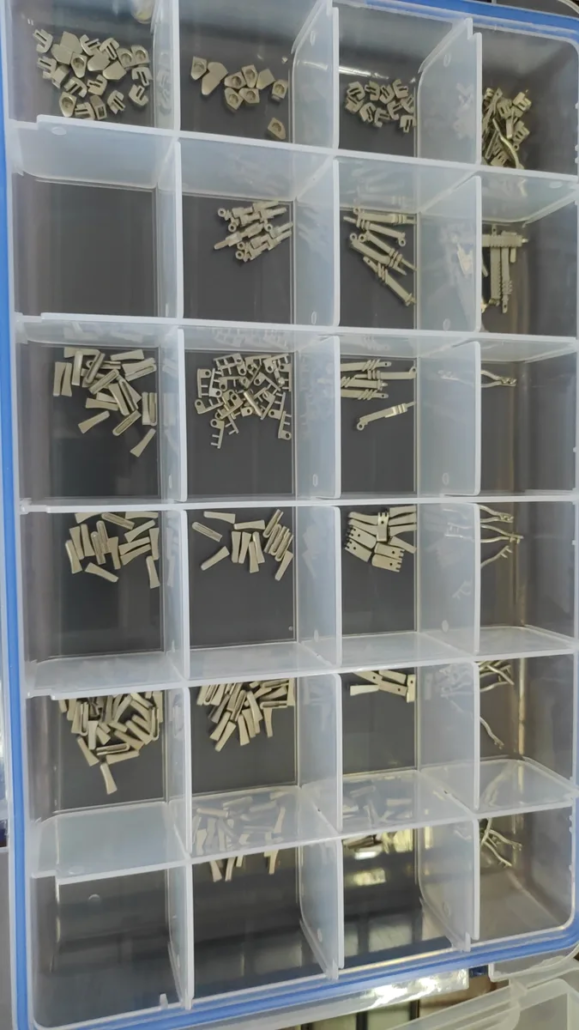
Miniaturization through micro-MIM is especially transformative for minimally invasive surgery. Components with features below 50 µm and overall dimensions under 1 mm are achievable using fine metal powders with particle sizes of 1–20 µm. Donatelle Medical specializes in micro-MIM for Class I, II, and III medical devices in cleanroom manufacturing environments. Part consolidation — merging several machined components into a single MIM piece — cuts assembly complexity, eliminates potential failure points, and improves device reliability. A surgical blade that requires 20–40 minutes of multi-axis CNC machining can be molded in just 2–4 minutes of cycle time, followed by batch debinding and sintering.
Navigating the Regulatory Landscape for Medical MIM
Medical MIM manufacturers operate within a multi-layered regulatory framework covering quality management systems, biocompatibility testing, and device-specific approvals — with a landmark regulatory shift taking effect in early 2026.
The most significant recent development is the FDA’s Quality Management System Regulation (QMSR), which replaced 21 CFR Part 820 on February 2, 2026. The QMSR incorporates ISO 13485:2016 by reference, giving this international standard the force of U.S. federal law. MIM manufacturers supplying the American market must now maintain ISO 13485-compliant quality systems that satisfy both FDA and international requirements simultaneously. The FDA retains supplemental requirements under §820.3 (definitions), §820.35 (record controls), and §820.45 (labeling), but the harmonization substantially reduces the dual-compliance burden for global manufacturers. In Europe, EU MDR 2017/745 governs all MIM components used in medical devices, requiring CE marking via Notified Body conformity assessment, comprehensive technical documentation (Annex II), UDI implementation, and post-market surveillance programs.
Biocompatibility validation
Under the ISO 10993 series is mandatory for any MIM part that contacts the body. The testing cascade depends on contact type and duration. Virtually all body-contacting devices must pass the “Big Three” tests: cytotoxicity (ISO 10993-5), sensitization (ISO 10993-10), and irritation (ISO 10993-23). Implantable MIM components face additional requirements, including hemocompatibility (ISO 10993-4), implantation effects (ISO 10993-6), and chronic systemic toxicity (ISO 10993-11). For metal MIM parts specifically, ISO 10993-15 covers identification and quantification of degradation products from metals and alloys, while ISO 10993-18 addresses extractables and leachables. A full biocompatibility testing program typically costs $15,000–$40,000 and takes 8–12 weeks to complete.
Cleanroom manufacturing
Follows ISO 14644 classifications. Most medical MIM facilities operate at ISO Class 8 for non-implant component integration and packaging. ISO Class 7 is standard for many device applications, while ISO Class 5 is required for final assembly of sterile implantable products.
Process validation
(IQ/OQ/PQ) is mandatory at every stage of the MIM process — injection molding, debinding, sintering, and post-processing — because the quality of the output cannot be fully verified through final inspection alone. Statistical process control with Cpk ≥ 1.33 is the standard expectation for critical-to-quality characteristics. Full lot traceability — from the powder supplier’s Certificate of Analysis through feedstock batching, injection, debinding, sintering, post-processing, final inspection, and shipping — is required under all major regulatory frameworks.
Innovations of 2024–2025: What’s Reshaping the Future of Medical MIM
Several converging technology trends are expanding MIM’s capabilities and strengthening its competitive position in medical manufacturing.

The convergence of MIM and additive manufacturing is the most structurally significant development. Binder jetting uses the same metal powders and sintering furnaces as MIM, creating a natural technological synergy. Indo-MIM is deploying HP Metal Jet S100 binder jetting machines — four in Bangalore, three in San Antonio, with five more planned — alongside its MIM production lines. Smith Metal Products uses binder jetting to prototype medical devices before committing to MIM tooling for production. The workflow is straightforward: binder jetting produces hundreds of parts for regulatory trial submissions without tooling investment, then MIM takes over for high-volume production above approximately 20,000 units, where its cost advantage is decisive.
Micro-MIM addresses the medical industry’s constant push toward smaller instruments and implants. Achieving micron-level tolerances, micro-MIM produces endoscopic instrument tips, micro check valves for fluid regulation in narrow-diameter tubing, and miniature gear assemblies for surgical robots. Industry estimates indicate that custom component demand driven by miniaturization has risen 44%.
Bioabsorbable metals represent a frontier application. Magnesium-based MIM implants closely mimic the mechanical properties of natural bone and eliminate the need for removal surgery. Clinical studies demonstrate that magnesium screws achieve superior osseointegration compared to titanium — with significantly higher bone volume, mineral density, and bone-implant contact.
Digital manufacturing integration is transforming both quality and efficiency. AI-powered defect detection has delivered a 30% improvement in detection accuracy, with 44% of MIM facilities now using smart inspection tools. Digital twin technology enables real-time monitoring of sintering processes, while simulation software optimizes part design before tooling investment.
Antimicrobial surface treatments applied to MIM parts are advancing toward clinical use. Copper-doped coatings reduce post-operative infection risk while promoting blood vessel formation, and zinc/silver micro-galvanic couples on titanium substrates combine bone-growth stimulation with antibacterial properties.
A Market Accelerating Through Consolidation and Expansion
The global MIM market was valued at approximately $4.6–5.75 billion in 2024, with strong consensus projecting growth to $9.5–11.35 billion by 2030–2033 at a CAGR of 8–11%. The medical and dental segment accounts for roughly 26% of total MIM revenue and ranks among the fastest-growing end-use categories.

Asia-Pacific dominates the overall MIM market with approximately 47% share, while North America generated $1.19 billion in 2024 (about 21% of the global total). In the medical MIM segment specifically, Asia-Pacific is expected to lead growth thanks to expanding healthcare infrastructure in China and India, while North America benefits from advanced R&D ecosystems and regulatory frameworks that reward manufacturing consistency.
Industry consolidation accelerated through 2024 and 2025. Indo-MIM filed a $113 million IPO in September 2025 to fund capacity expansion, reporting revenue of approximately $399 million in FY2025 (up 16% year-over-year) with net profit up 49%. OptiMIM and Vasantha Tool Crafts formed the OptiMIM Global joint venture in April 2025. Biomerics launched its MIM Center of Excellence in late 2024 with a focus on surgical robotics. Integer Holdings acquired Pulse Technologies for $140 million to expand micro-machining capacity for structural heart devices.
Eight key factors are driving medical MIM growth: miniaturization of surgical devices, global population aging, rising prevalence of chronic diseases, cost advantages over traditional machining, proven biocompatibility of MIM alloys, expansion of surgical robotics, increasing healthcare spending in emerging markets, and growing demand for dental implants and orthodontic devices. An estimated 55% of medical device manufacturers now incorporate MIM components into their products.
Conclusion
Medical MIM stands at an inflection point where manufacturing maturity meets transformative innovation. The technology has evolved from producing simple orthodontic brackets to fabricating titanium spinal fusion cages, bioabsorbable magnesium implants, and micro-scale surgical robot components — all while delivering documented cost reductions of 50–70% versus machining at production volumes.
The convergence with binder jetting additive manufacturing creates a powerful pipeline from prototyping to mass production, lowering barriers to entry for novel medical devices. The FDA’s QMSR harmonization with ISO 13485 simplifies global regulatory compliance, potentially accelerating adoption among manufacturers previously deterred by the complexity of maintaining dual-standard quality systems. With dedicated ASTM standards now covering MIM titanium, cobalt-chromium, and commercially pure titanium for surgical implants, the material qualification barriers that once confined MIM to instruments have been systematically removed.
The companies investing most aggressively — Indo-MIM with its binder jetting fleet, Biomerics with its dedicated medical MIM center, and the growing network of ISO 13485-certified micro-MIM specialists — are positioning themselves for a medical segment that could exceed $1 billion by 2032, fundamentally reshaping how the world’s surgical instruments, implants, and drug delivery devices are made.
Manufacture Your MIM Components with Eurobalt

If you are evaluating MIM for a medical device component — whether a surgical instrument, an orthopedic part, or a precision device housing — Eurobalt is ready to help you move from specification to production.
We manufacture custom MIM components on order, working with your technical drawings and requirements. Our experience covers the biocompatible alloys and tolerances that medical applications demand, across a broad range of component types discussed in this article.


