Hydraulic Cylinders for Agricultural Machinery: Built for the Price-Quality Optimum
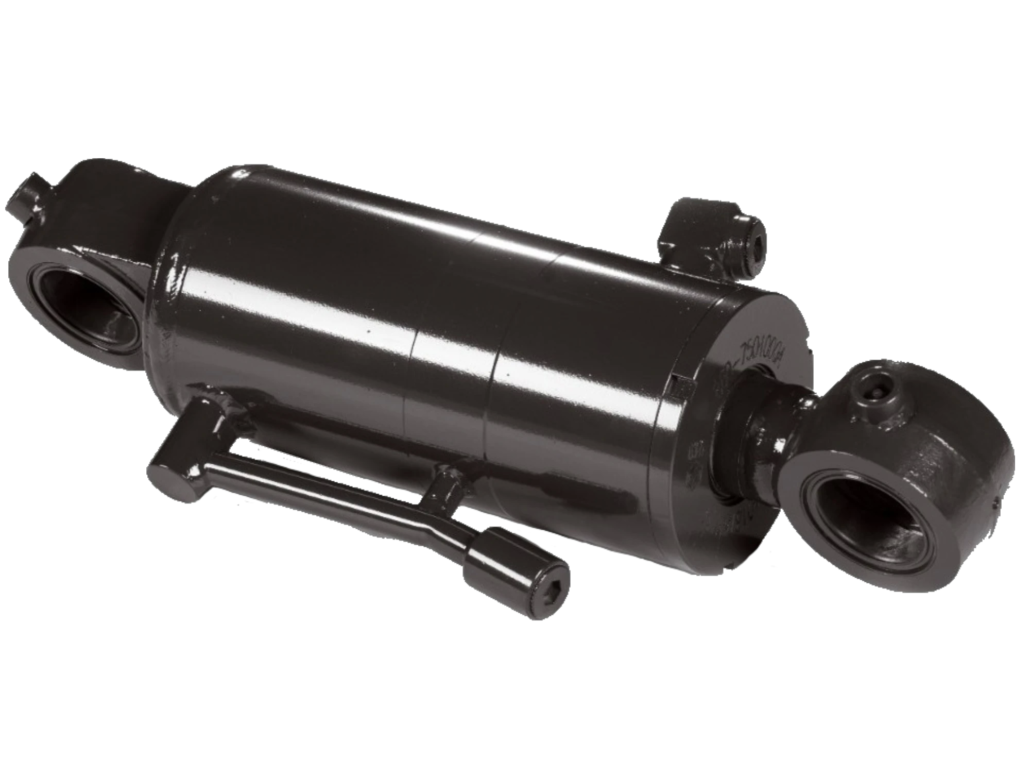
Eurobalt manufactures hydraulic cylinders for tractors, loaders, trailers and harvesting machinery.
The Cylinder Is a Consumable on a Farm Machine
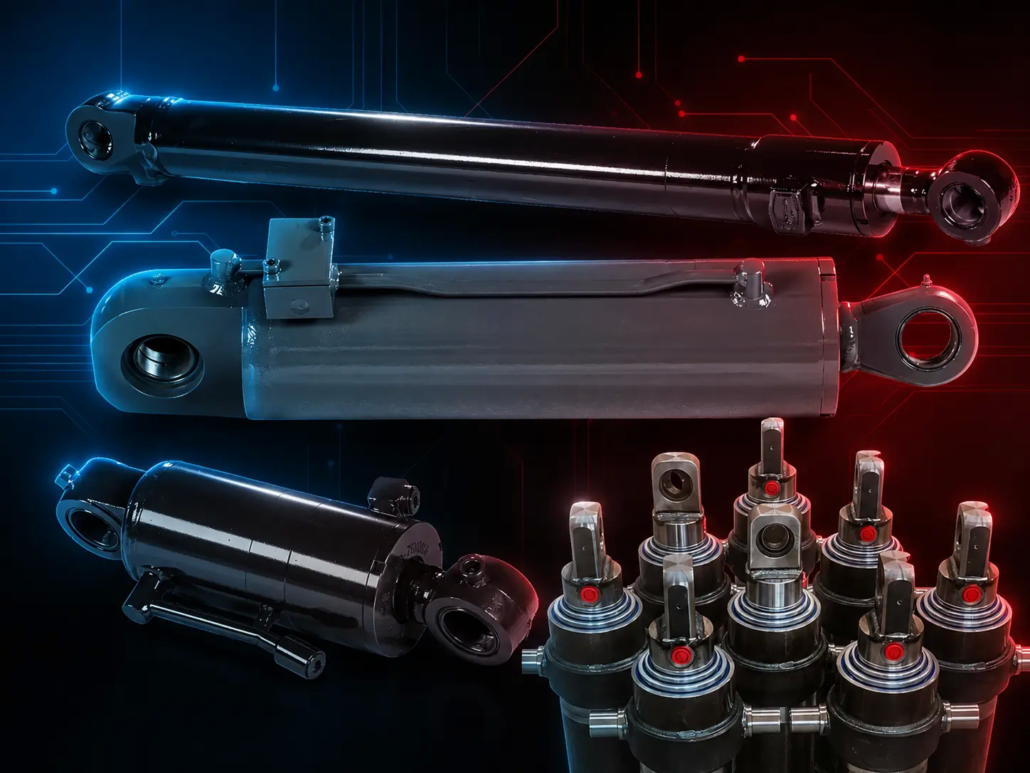
Industrial group Eurobalt manufactures hydraulic cylinders of any complexity on its own production line: single-acting, double-acting and telescopic, from samples and small batches to standard series. Agricultural equipment is a core application for us, and a special one at that: no other sector treats hydraulic cylinders so plainly as a consumable part.
A cylinder on a front loader, a tipping trailer or a mounted implement works in conditions that industrial hydraulics rarely see. Dust and abrasive soil particles settle on the rod with every stroke. Moisture, fertilisers and crop-protection chemicals attack the rod surface and the welds. Loads arrive as shocks: a bucket hitting frozen ground, an implement dropped at headland speed. And all of it is compressed into a short season when the machine works around the clock, while in winter the cylinder stands still and corrodes rather than wears.
Every farm and every dealer knows the outcome: cylinders on agricultural machines get replaced regularly, and each replacement costs twice, once as a part and once as downtime in the middle of the season.
Price-Quality: Where the Optimum Sits
When replacement is a matter of routine, the buying logic changes. A cylinder built to aerospace specifications would survive longer, but its price makes no economic sense on a grain trailer. A no-name cylinder at the lowest possible price makes even less sense: it fails mid-season, and the harvest does not wait for spare parts.
The optimum sits in between, and hitting it is an engineering task. Money goes where it buys service life, and is saved where it does not:
| What we invest in | Why it pays back |
|---|---|
| Induction-hardened rod, chrome or chrome + nickel plating up to 80 microns | The rod is the part that dust and chemicals kill first; hard, corrosion-resistant surface is the single biggest life extender |
| Brand seals: Hallite, Trelleborg | Seals are the most common failure point; proven compounds tolerate dust, temperature swings and winter storage |
| Honed barrel, H8 tube tolerance, f7 rod tolerance | Correct fits mean even seal wear and no early leakage |
| 100% pressure and tightness testing | A cylinder that fails in September costs far more than its price in April |
| Where we save | Why it does not hurt |
|---|---|
| Series production, minimum batch of 50 pieces | Tooling and setup costs spread over the batch instead of each piece |
| Automatic welding | Repeatable seams at series cost, more consistent than manual welding, not less |
| No unnecessary options | Cushioning and position sensors are available, but only where the machine actually needs them |
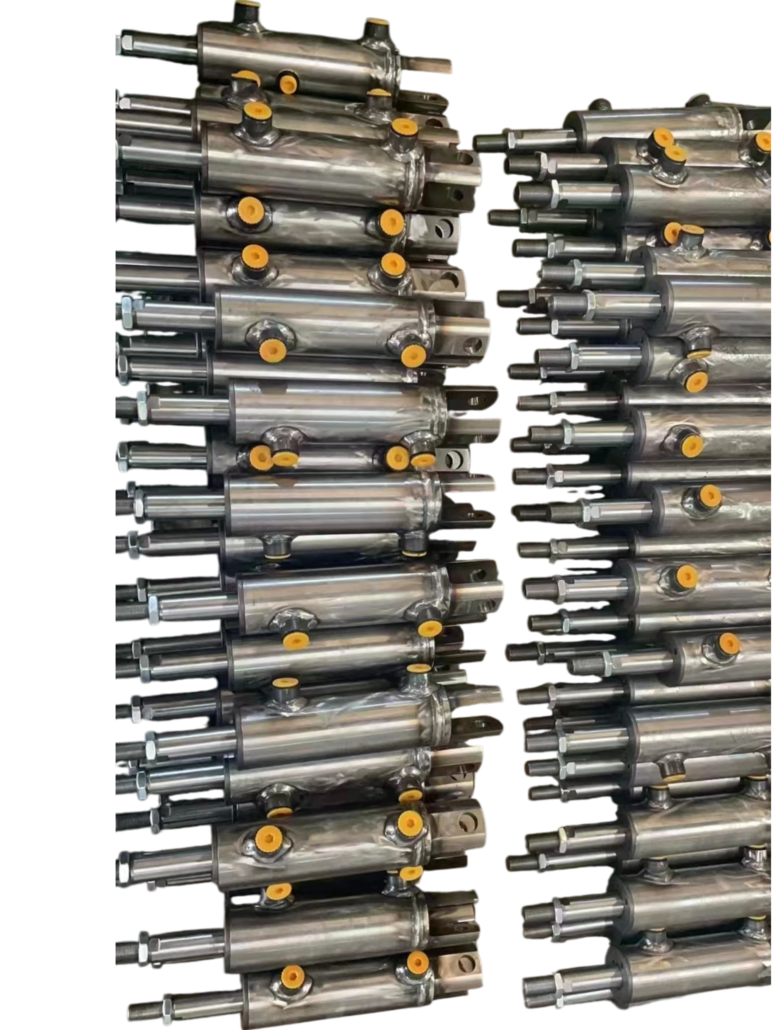
This is the cylinder the agricultural market asks for: one that costs like a series part and lasts like an engineered one. Fewer replacements per machine life, and a sensible price each time a replacement is due.
Which Machines We Build Cylinders For
- Front loaders and telehandlers: lift and bucket cylinders taking shock loads all day
- Tractor hitches and steering: compact double-acting cylinders with hardened rods
- Tipping trailers and dump bodies: telescopic cylinders up to 7 stages, also covered in our note on underbody cylinders
- Ploughs, cultivators and mounted implements: fold and depth-control cylinders that spend their life in dust
- Harvesters and sprayers: header lift, steering and boom cylinders where mid-season failure is most expensive
- Forestry machinery: the same Regular Cylinders line covers forestry and construction equipment
Working pressures of the Regular Cylinders line are 160 to 300 bar. Where a machine needs more, our special cylinder programme goes up to 500 bar, piston diameters up to 1000 mm and strokes up to 15 m, with cushioning and position sensors on request.
Replacement Cylinders: by Drawing or by Sample
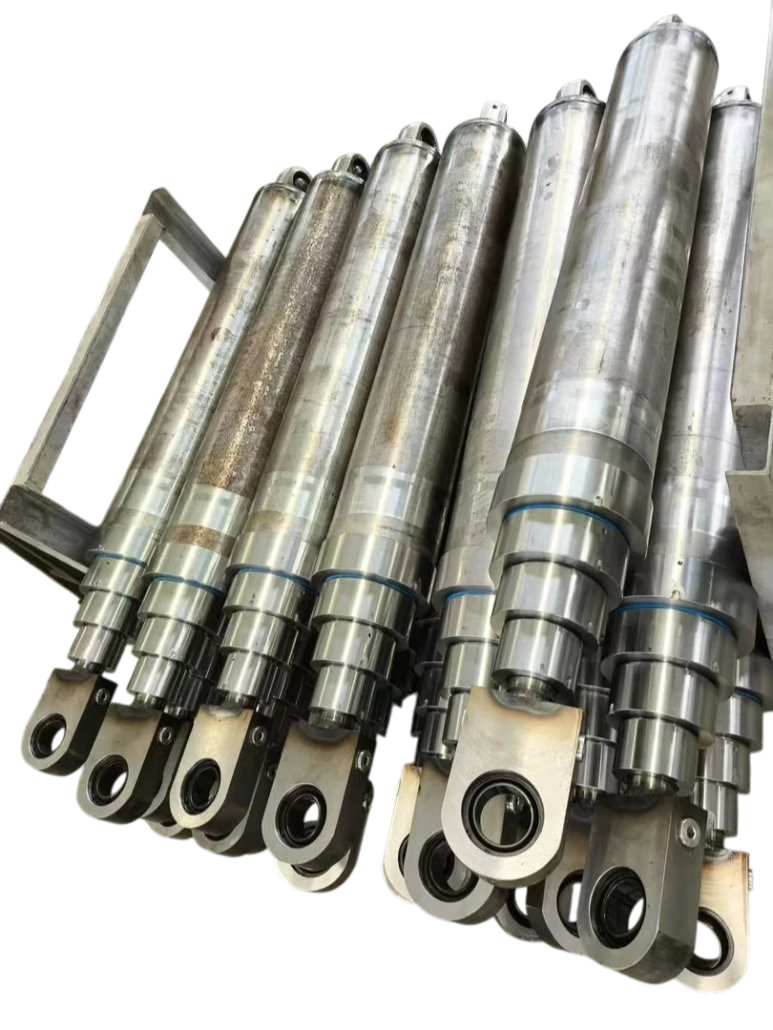
A large share of agricultural orders is not new-machine supply but replacement. We manufacture direct replacement cylinders from a customer drawing, and when no drawing exists we take dimensions from the worn cylinder itself and reverse-engineer it, mounting interfaces included. Individual cylinder parts such as rods, barrels, pistons and glands are available as well when rebuilding makes more sense than replacing.
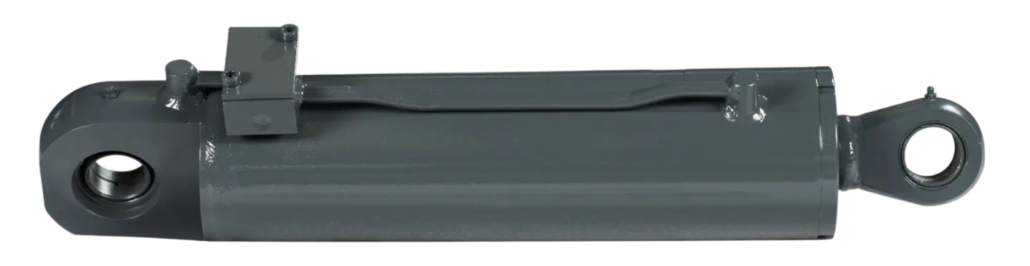
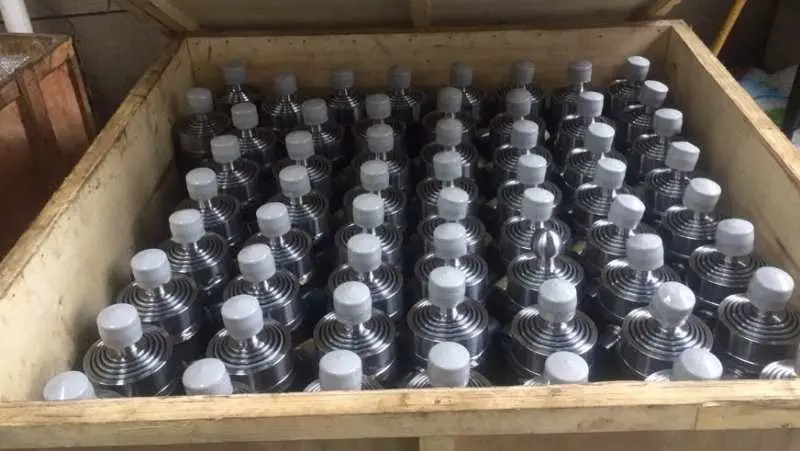
For fleets and dealers the batch logic works the same way as for OEMs: a batch of 50 identical replacement cylinders on the shelf before the season costs less per piece and removes the mid-season waiting. Every batch can be shipped with spare seal kits upon request, so routine reseal work can be done in the farm workshop.
Quality Control That Matches Field Reality
Every cylinder passes the same control chain regardless of price class: incoming material inspection against the grade certificate, stage-by-stage checks during machining and welding, and final testing of 100% of pieces. The pressure test runs at 1.5 to 2 times nominal pressure; tightness is verified on every cylinder, and push and pull forces are measured on the test stand, with results available to the customer. Our FMEA failure-analysis database accumulates warranty and field data, and agricultural duty cycles are where we learn the most from it.
Eurobalt backs agricultural cylinders with a 1-year warranty, extendable on request.